November 4, 2025
NEWS C&C
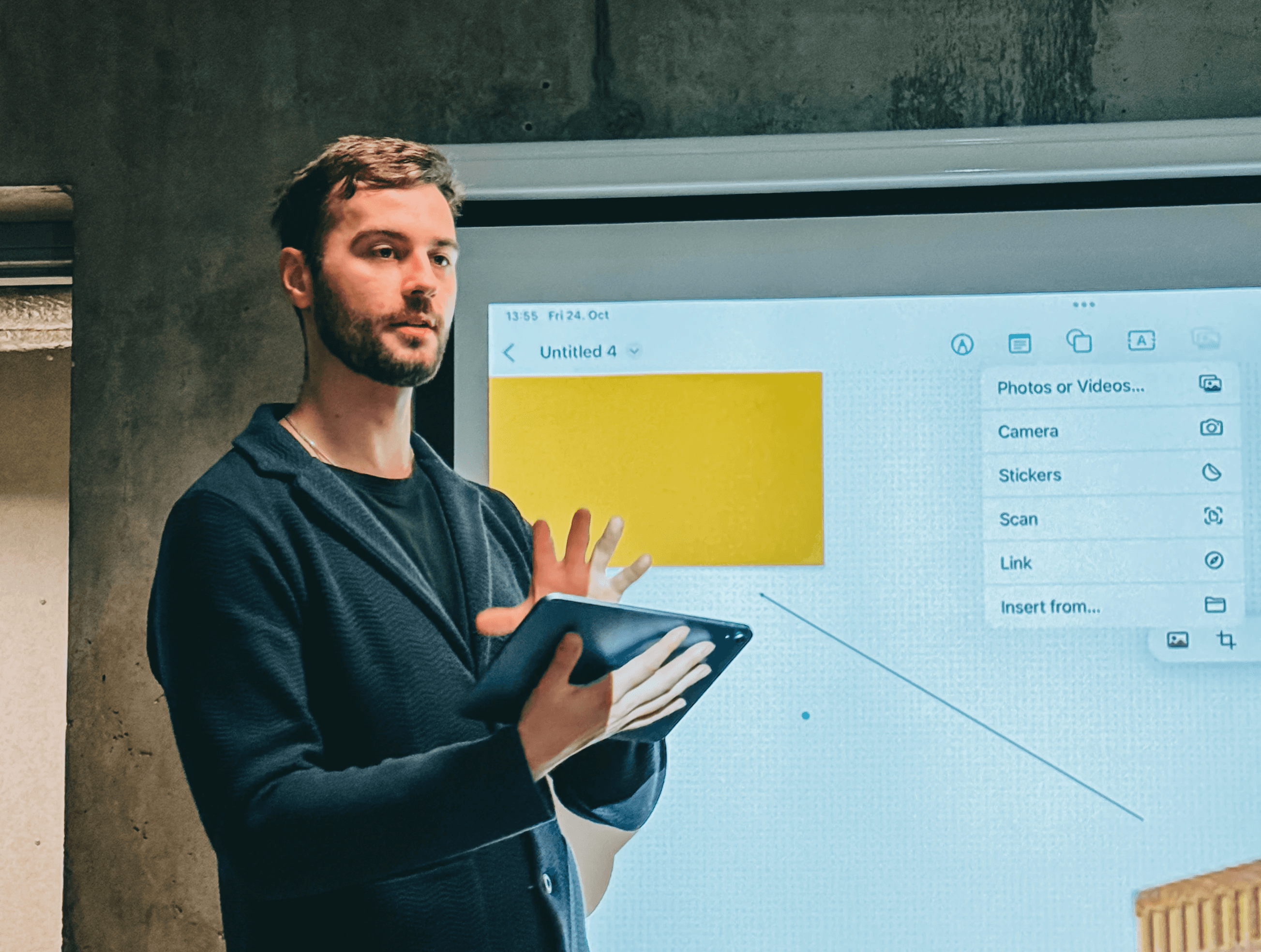
The use of digital learning tools in schools is no longer the future - it is today's reality. The iPad has become an essential device in many schools, helping teachers and students rethink learning: lessons are more interactive, students can learn more independently, and teachers can provide more meaningful feedback. However, the use of the iPad in school is successful only if it is based on a conscious and professional strategy, not just the addition of new technology to an old system. That's why we joined forces with the MTÜ ASÕP Growth Program to bring technological knowledge to teachers and schools through practical training.
The Growth Program for In-Service Teachers brings Master's degree career changers to schools, who are supported, trained, and helped to reach the teaching qualification. "Our participants in the teacher growth program, who from spring to the end of summer completed a training program called 'Learning and Teaching for the Beginner Teacher' created in collaboration with Tallinn University and have been working as teachers in schools since September, were also on the learning wave during the school holiday. They prepared their professional portfolios, participated in group supervision to discuss the joys and challenges of their first months, and took digital skills training to learn which digital tools can make work easier and make learning more exciting and engaging for students. Our program participants have had diverse professional backgrounds, and now they bring their valuable work and life experience to the teaching profession, enriching both school life and the students' learning experience," says Elina Lahesoo, Recruitment and Training Coordinator of the MTÜ ASÕP Growth Program.
A Conscious Choice, Not a Trend
Successful digital education begins with awareness. The iPad is an excellent tool that supports students' creativity, critical thinking, problem-solving skills, and of course, enhances digital competence. Teachers can assign tasks and monitor students' progress using specially designed educational programs, including Jamf School. Professional setup and management of iPads ensure that students can only use those apps and functions that are necessary for learning. This means that during exams, tests, and classwork, the devices can be put into a special work mode that prevents the use of distracting applications or websites. Thus, the device becomes a reliable tool, not a risk. "The hesitation that adopting technology may be overwhelming for a teacher in the classroom and rather a distracting factor is entirely human, but this is where smart and convenient device management comes into play, allowing the limitation of the iPad's functions and content," comments Jüri Põld, Head of Training at C&C. "Thanks to smart educational and management programs, the teacher can comfortably get real-time insights into what is happening on the iPads in students' hands, and if necessary, discreetly guide those who need help or assign new tasks to faster students without others feeling bad. Lesson content can be controlled both on the fly and pre-packaged - the teacher presses just one button, and the entire lesson plan starts automatically. This way, the lesson conductor doesn't have to focus on the technical side, but all the learning content runs according to the pre-arranged plan as if by magic."
Professional Partnership and Support
Truly effective digital education is born out of collaboration - between the school, teachers, technical partners, and students. Professional technical support and well-managed device ecosystems create an environment where teachers can focus on content, not configuration.
This approach ensures that technology serves teaching, not the other way around. An iPad in the classroom is not just a technological innovation - it is a new way to learn and teach. When the use of technology is consciously planned, securely managed, and pedagogically justified, it helps shape students into independent and responsible digital citizens who are ready for future challenges.